
Pakistan Calls PCA Verdict a Major Diplomatic and Legal Victory
- Internationl
- (Asia/Kolkata)
NAZRANA TIMES – SPECIAL REPORT
Pakistan Hails Landmark Court Rulings as India Dismisses Arbitration as a ‘Charade’
ISLAMABAD — 17 May 2026
Ali imran Chattha
Pakistan has welcomed a new supplemental award issued by the Permanent Court of Arbitration (PCA) in The Hague, describing it as a significant legal and diplomatic victory that places “substantive limits” on India’s ability to regulate water flows on the western rivers — the Indus, Jhelum and Chenab.
The ruling marks the second major setback for New Delhi within a year, following a binding PCA award delivered on 8 August 2025. India has consistently rejected the tribunal’s authority, describing the proceedings as “illegally constituted”, “null and void”, and most recently, a “charade at Pakistan’s behest”.
The two nuclear-armed neighbours are now embroiled in an increasingly bitter legal confrontation over the 1960 Indus Waters Treaty, with Islamabad celebrating international judicial backing while New Delhi insists the arbitration mechanism itself breaches the treaty framework.
Fresh Blow to India Over ‘Maximum Pondage’
The latest supplemental award, issued on 15 May 2026, centred on the technically sensitive issue of “maximum pondage” — the volume of water that may be temporarily stored in reservoirs attached to hydropower projects.
Following hearings concluded on 28 April, the court ruled decisively in Pakistan’s favour.
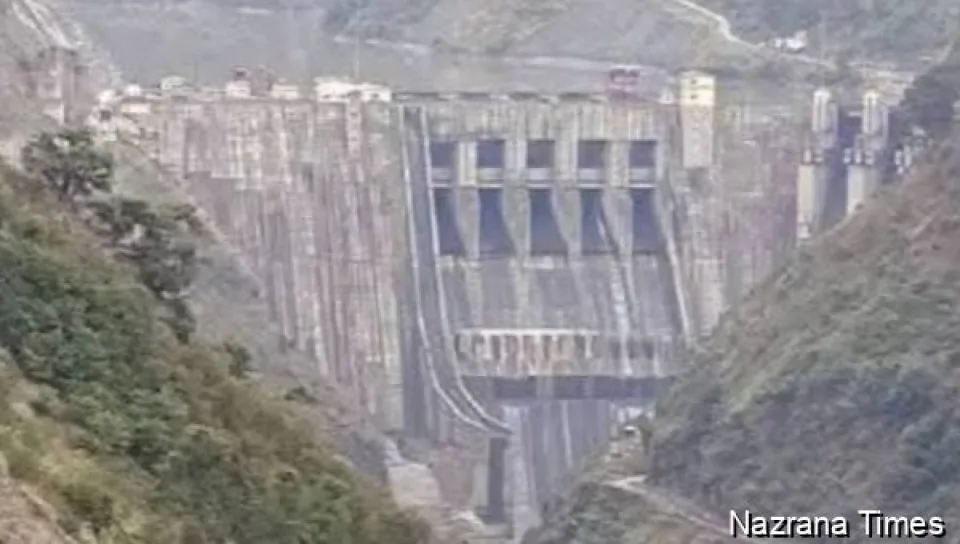
Pakistan argued that Article 1(11) of the Indus Waters Treaty defines “pondage” strictly as water stored temporarily to meet genuine daily or weekly fluctuations in electricity demand. Islamabad maintained that India’s designs for the Kishenganga and Ratle hydroelectric projects relied on exaggerated and hypothetical operational assumptions in order to justify larger storage capacities.
The tribunal accepted Pakistan’s position, ruling that storage calculations must be based on demonstrable, project-specific evidence, including actual river flows, turbine requirements and downstream obligations. The court further held that pondage could not be artificially inflated in a manner that effectively created strategic water storage capacity.
The decision is expected to have far-reaching implications for future Indian run-of-river projects on the western rivers, potentially requiring New Delhi to redesign or comprehensively justify storage components in forthcoming schemes.
Pakistan’s Foreign Office said the restrictions imposed by the award “are not mere formalities” and apply directly at the planning and design stage rather than being satisfied through later operational assurances.
The 2025 Award and the Treaty Interpretation Battle
The latest ruling follows an earlier landmark decision issued by the PCA on 8 August 2025 concerning the interpretation of the Indus Waters Treaty.
In that award, the tribunal ruled overwhelmingly in Pakistan’s favour on several core issues, affirming that India remains obligated to allow the waters of the western rivers — the Indus, Jhelum and Chenab — to flow for Pakistan’s unrestricted use in accordance with treaty allocations.
Crucially, the tribunal also rejected India’s unilateral declaration placing the treaty “in abeyance”. New Delhi had announced the suspension in April 2025 following the Pahalgam militant attack, which killed 26 people.
The court held that the treaty contains no provision permitting unilateral suspension of dispute-resolution proceedings and stated that India could not lawfully halt arbitration mechanisms established under the agreement.
The award further emphasised that the treaty remains fully operative unless terminated by mutual consent between both states.
India Rejects Tribunal’s Authority
India has maintained an uncompromising position throughout the proceedings.
The Ministry of External Affairs has repeatedly described the tribunal as an “illegally constituted so-called Court of Arbitration”, insisting that all awards and pronouncements issued by it are invalid.
Responding to the May 2026 ruling, MEA spokesperson Randhir Jaiswal declared that India “categorically rejects” the award, adding that any decisions issued by the tribunal are “null and void”.
New Delhi has also continued to defend its decision to place the treaty in abeyance, arguing that Pakistan’s alleged support for cross-border militancy justifies the move — a charge Islamabad firmly denies.
Indian officials have gone further still, describing the entire arbitration process as a “charade at Pakistan’s behest” and asserting that the tribunal’s establishment itself constitutes a breach of the treaty.
Islamabad Balances Legal Victory With Calls for Dialogue
Despite celebrating the rulings, Pakistan has simultaneously attempted to project diplomatic restraint.
The Foreign Office reiterated remarks by Prime Minister Shehbaz Sharif stating that Islamabad remains prepared to engage in “meaningful dialogue” with India on all outstanding disputes, including Jammu and Kashmir, water issues, trade and terrorism.
The approach reflects Pakistan’s broader strategy of combining international legal pressure with public openness to bilateral engagement, while seeking to avoid further escalation in an already fragile regional environment.
Why the ‘Pondage’ Ruling Matters
Although highly technical, the pondage dispute lies at the heart of long-standing Pakistani concerns over Indian hydropower projects on the western rivers.
Under the treaty, India is permitted to construct run-of-river hydroelectric schemes on rivers allocated primarily to Pakistan, but strict design constraints apply to prevent excessive control over downstream flows.
Pakistan has long argued that expanded pondage capacities could allow India to manipulate water releases during critical agricultural periods or times of political tension.
By insisting that storage calculations must be tied directly to genuine operational needs and real hydrological data, the tribunal has effectively narrowed the scope for future large-scale storage under Indian projects.
The ruling therefore strengthens Pakistan’s ability to legally challenge future hydropower developments before they are implemented.
Political and Strategic Implications
In Pakistan
The rulings provide a significant diplomatic and political boost for Islamabad at a time of mounting domestic concern over water scarcity and climate stress.
Officials are expected to raise the awards at international forums including the United Nations, the World Bank and SAARC, portraying India as violating a binding international treaty.
Nevertheless, the judgments offer little immediate practical relief. India continues to operate the disputed Kishenganga and Ratle projects, and there is currently no enforcement mechanism capable of compelling compliance.
In India
Within India, calls for a comprehensive renegotiation — or even abandonment — of the Indus Waters Treaty have grown louder among strategic commentators and sections of the political establishment.
New Delhi’s decision to suspend participation in treaty mechanisms has already disrupted data-sharing arrangements, Permanent Indus Commission meetings and project notifications.
Internationally
The World Bank, which brokered the treaty in 1960, has so far remained publicly cautious.
Regional powers are monitoring developments closely, particularly given the wider geopolitical implications for South Asian stability. Analysts warn that any prolonged deterioration in water cooperation between India and Pakistan could significantly heighten regional tensions.
Legal Experts Weigh In
International legal specialists largely maintain that the tribunal was constituted in accordance with treaty provisions.
One Hague-based scholar noted that the World Bank’s role in appointing the chairman remained valid even after India declined to nominate its own arbitrator, adding that international tribunals frequently proceed through default appointments when one party refuses participation.
Legal experts have also questioned India’s reliance on the concept of “abeyance”.
A London barrister specialising in international water law argued that no treaty permits unilateral suspension absent a formally established material breach, and that invoking terrorism concerns as a political justification does not satisfy recognised international legal standards under the Vienna Convention on the Law of Treaties.
However, analysts also caution that the awards may remain largely symbolic unless backed by sustained diplomatic pressure.
Without enforcement action through international institutions — widely viewed as improbable given geopolitical realities — the rulings may have limited practical effect on the ground.
A Treaty Under Strain
Brokered by the World Bank and signed in September 1960, the Indus Waters Treaty has long been regarded as one of the world’s most durable water-sharing agreements, surviving wars, military crises and decades of hostility between India and Pakistan.
The treaty allocates unrestricted use of the eastern rivers — the Ravi, Beas and Sutlej — to India, while granting Pakistan primary rights over the western rivers — the Indus, Jhelum and Chenab.
India’s decision in April 2025 to place the treaty in abeyance has created unprecedented uncertainty surrounding data exchange, flood forecasting, drought management and joint inspections.
Many international legal observers argue that India’s refusal to participate in arbitration proceedings may itself constitute a breach of treaty obligations.
Conclusion: Legal Success, Strategic Deadlock
For Pakistan, the PCA rulings represent a major legal and diplomatic achievement, reinforcing its interpretation of the Indus Waters Treaty and placing new constraints on Indian hydropower development.
For India, however, the awards remain unacceptable and unenforceable.
The result is an increasingly dangerous stalemate: Pakistan possesses favourable international rulings but limited means of implementation, while India retains operational control over contested projects and continues to reject the tribunal outright.
More than six decades after its signing, the Indus Waters Treaty now faces perhaps the gravest challenge in its history — with the future of one of the world’s most critical transboundary water agreements hanging in the balance.
Nazrana Times will continue to monitor developments in this evolving legal and geopolitical dispute.






Leave a Reply