
Iran Reviews U.S. Response to Peace Proposal; Pakistan Pushes for Diplomacy
- Internationl
- (Asia/Kolkata)
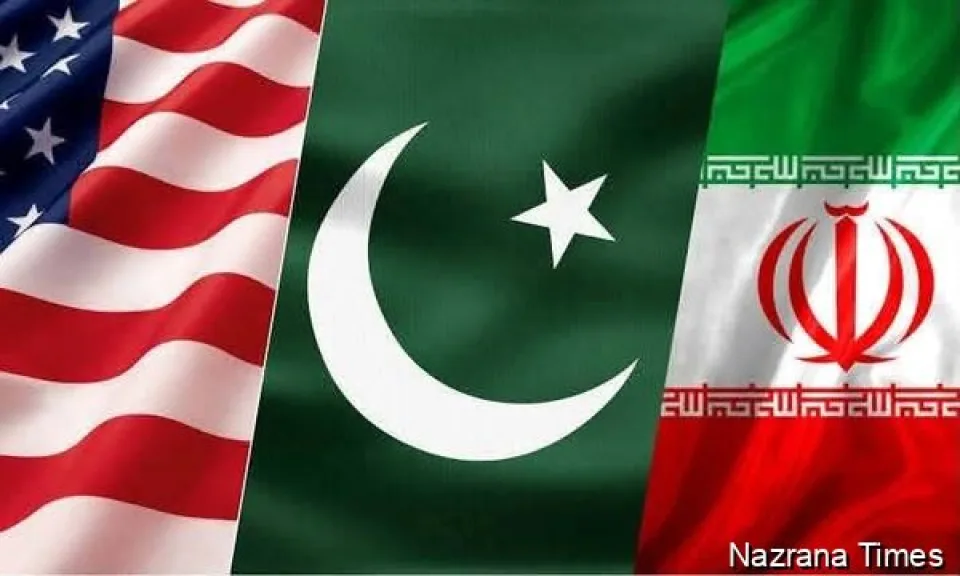
Iran Reviews U.S. Response to Peace Proposal as Washington Maintains Tough Stance; Pakistan Urges Diplomacy
Nazrana Times Ali Imran Chattha
Tehran / Washington / Islamabad
Iran is carefully examining the United States' formal reply to its latest peace proposal even as Washington signals deep scepticism over its terms, with Pakistan the principal mediator in the months-long conflict continuing to press both sides toward a diplomatic settlement.
Iranian Foreign Ministry spokesperson Esmaeil Baghaei confirmed over the weekend that Tehran is conducting a detailed review of Washington's response and that a final decision will be taken only after consultations with senior political and security leadership. Speaking on state television, Baghaei also clarified that Iran's 14-point plan exclusively focuses on ending the war and contains no issues related to the nuclear domain, adding that Tehran's focus at this stage is on the specifics of ending the war in the region, including Lebanon.
Iran's 14-Point Proposal
Iran submitted a 14-point response to the U.S. proposal, according to official Iranian media. The proposal was formulated in response to a nine-point U.S. plan, and comes weeks after the ceasefire that began on 8 April, during which Washington and Tehran have been unable to negotiate a permanent peace agreement.
Key elements of Tehran's plan include a demand to resolve all outstanding issues and end the war within 30 days, in contrast to the two-month ceasefire the United States had previously proposed. Other demands include guarantees against future military aggression, withdrawal of U.S. forces from Iran's periphery, an end to the naval blockade, the release of frozen Iranian assets, payment of reparations, the lifting of sanctions, an end to fighting in Lebanon, and a new mechanism governing the Strait of Hormuz.
Washington's Cautious and Firm Response
The Trump administration's initial reaction to Iran's proposal has been decidedly cool. President Trump confirmed that he had been briefed on the concept of the deal but struck a characteristically firm tone, warning that if Iran were to act against the terms, a resumption of strikes remained a possibility. He added that the U.S. was doing well in the standoff and claimed Iran was desperate for a settlement because the country had been severely weakened by months of conflict and a naval blockade.
U.S. officials indicated that the President was unhappy with the proposal because it did not address Iran's nuclear programme. Secretary of State Marco Rubio acknowledged the proposal was better than expected but questioned Tehran's intentions, stating that any agreement must definitively prevent Iran from pursuing a nuclear weapon at any point.
Analysts described Tehran's latest proposal as containing demands unlikely to be accepted, noting it appeared to mirror the maximalist approach Washington itself had taken throughout the negotiation process.
The Strait of Hormuz: The Core Flashpoint
At the heart of the impasse remains the Strait of Hormuz. Tehran wants a permanent end to the war, while Washington has insisted that Iran first reopen the strait, through which a fifth of global oil and gas exports pass. Iran's de facto blockade of the strait came in response to the U.S. and Israeli attacks on the country on 28 February. A naval blockade of Iranian ports by the Trump administration, despite the ceasefire, has further heightened tensions.
The Islamic Revolutionary Guard Corps stated that the room for U.S. decision-making has narrowed, asserting that Washington faces a choice between an impossible military operation or a bad deal with the Islamic Republic. Meanwhile, maritime incidents continue to roil regional waters, with vessels near the Iranian coast reporting attacks by small craft in recent days.
Pakistan's Indispensable Mediation Role
Pakistan remains the fulcrum of the diplomatic process. On 8 April 2026, the United States and Iran agreed to a two-week ceasefire mediated by Pakistan, with Prime Minister Shehbaz Sharif announcing the agreement. Tehran subsequently transmitted its latest 14-point plan to Pakistan, which conveyed it to Washington.
The Islamabad Talks of 11 and 12 April 2026 brought together a 300-member U.S. negotiating team led by Vice President JD Vance alongside special envoys Steve Witkoff and Jared Kushner, and a 70-member Iranian team led by parliamentary speaker Mohammad Bagher Ghalibaf and Foreign Minister Abbas Araghchi. The Pakistani mediating team was led by Prime Minister Shehbaz Sharif, Field Marshal Asim Munir, and Deputy Prime Minister and Foreign Minister Ishaq Dar. The talks lasted 21 hours across two days and ended without a final agreement.
Pakistan's diplomatic activity has not been limited to hosting talks. Field Marshal Asim Munir travelled to Tehran carrying what officials described as a new message from Washington, while Iranian Ambassador Moghadam stated that Tehran would conduct talks in Pakistan and nowhere else, because it trusts Pakistan as a mediator.
Pakistan has emerged as an unlikely but indispensable mediator, having achieved something many senior diplomats had failed to accomplish for decades producing direct talks between Washington and Tehran. Analysts credit Pakistan's unique position, noting that Islamabad shaped the sequencing, timing, and framing of proposals and held leverage with all sides. Since the U.S. and Iran severed diplomatic ties in 1979, the Pakistani Embassy in Washington has permanently housed Iran's Interests Section, handling part of Iran's diplomatic affairs in the United States and forming a stable channel for information exchange a structural advantage that has proven critical throughout this crisis.
Global Implications and Analyst Assessments
Analysts warn that Washington's public expression of doubt about a deal before the review is even complete has created a precarious diplomatic environment, with the president's rhetoric suggesting the divide between the two sides remains wide. Military pressure is further complicating diplomatic space, as Israeli strikes continue in Lebanon even as diplomatic outreach from Tehran proceeds, introducing volatile variables that a paper agreement cannot easily resolve.
Five major issues remain on the table: freedom of navigation through the Strait of Hormuz, Iran's nuclear and ballistic missile programme, reconstruction and sanctions relief, frozen Iranian assets, and a long-term peace agreement many of which echo unresolved divisions from the 2015 nuclear deal era.
Iranian Foreign Minister Araghchi claimed after the Islamabad Talks that the two sides had been inches away from a Memorandum of Understanding but accused the U.S. delegation of moving the goalposts. Iranian officials said they had never expected agreement in a single round and that contacts were expected to continue.
What Comes Next
The coming days are widely regarded as pivotal. If Tehran finds elements of the U.S. reply workable, a new round of negotiations likely in Islamabad could be convened. Pakistani officials have expressed cautious optimism, saying the process is moving in a positive direction while stressing that a final agreement will require sustained engagement and compromise from both sides.
Pakistan has continued to frame the engagement as part of a broader Islamabad process a structured, ongoing diplomatic track rather than an isolated event and has remained in contact with both Washington and Tehran, urging a resumption of direct dialogue.
For now, the world waits. Iran's review of Washington's response marks an open if fragile diplomatic channel. Whether that channel leads to a lasting peace or to renewed confrontation may be determined by decisions taken in Tehran, Washington, and Islamabad in the days ahead.




Leave a Reply