
From Apprehension to Admiration: Pilgrims Share Transformative Experience
- Internationl
- (Asia/Kolkata)

Indian Sikh Pilgrims Depart Pakistan Carrying Messages of Peace, Love, and Brotherhood After Vaisakhi Celebrations
ETPB Delivers Exemplary Hospitality as Officials Hail Pakistan as a Model of Interfaith Harmony
Lahore, April 19, 2026 Ali Imran Chattha
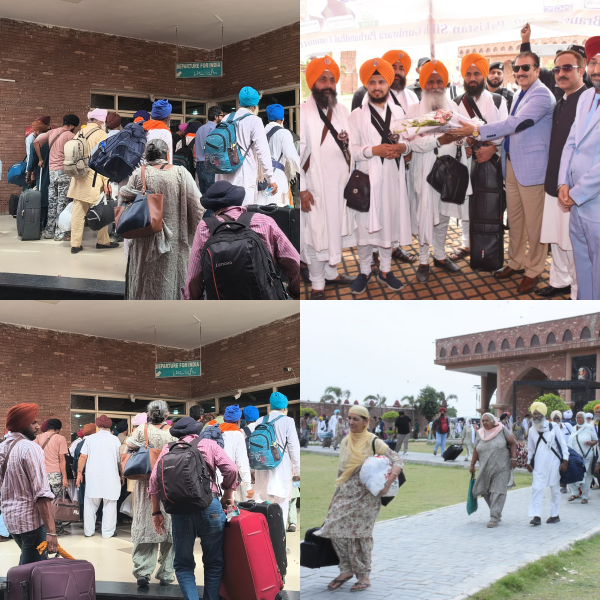
More than 2,200 Indian Sikh pilgrims have returned to India via the Wagah Border today, their hearts brimming with gratitude and their voices carrying a resounding message of peace, love, and interfaith harmony. Having completed their spiritually enriching Vaisakhi pilgrimage to Pakistan's sacred Gurdwaras, the devotees expressed profound appreciation for the seamless arrangements, warm hospitality, and unwavering respect extended to them throughout their stay.
A distinguished delegation of Pakistani officials personally bid farewell to the pilgrims at the Wagah Border in a ceremony that was as much a celebration of shared humanity as it was a formal send-off. The delegation was led by Sardar Ramesh Singh Arora Punjab's Provincial Minister for Minorities and Human Rights and President (Pardhan) of the Pakistan Sikh Gurdwara Parbandhak Committee (PSGPC) alongside Evacuee Trust Property Board (ETPB) Chairman Qamar-uz-Zaman and Additional Secretary Shrines Nasir Mushtaq. The occasion was marked by deeply emotional scenes, with many pilgrims visibly moved to tears as they reflected on the genuine affection they had experienced on Pakistani soil.
Jatha leader Sardar Harjeet Singh described the visit as "unforgettable," while Sardar Surjeet Singh praised Pakistan for setting "a shining new example of love and care for minorities." The pilgrims repeatedly and enthusiastically highlighted the world-class facilities provided by the ETPB and other government departments including comfortable accommodation, modern transportation, round the clock medical support, and robust security arrangements. They also commended the authorities for ensuring complete freedom to perform their religious rituals in a calm, dignified, and peaceful environment, a fact made all the more meaningful given the prevailing tensions in the broader region.
Many pilgrims candidly admitted they had arrived in Pakistan carrying apprehensions and negative perceptions shaped by certain media narratives. Their lived experience, however, completely and irreversibly transformed those views. "The love and respect we received here have touched our souls," one pilgrim shared with emotion at the farewell gathering. "We will carry Pakistan's message of brotherhood back to India and to the world." Several other pilgrims echoed these sentiments, describing their interactions with local communities and shrine staff as deeply humanising encounters that no news report could have prepared them for.
Speaking at the farewell ceremony, ETPB Chairman Qamar-uz-Zaman declared that serving religious minorities is a matter of national pride and institutional duty. "Pakistan is a living, practical example of interfaith harmony where every faith enjoys full freedom and equal respect," he said. He added that the pilgrims' glowing feedback genuinely reflects Pakistan's welcoming spirit and reaffirmed the government's commitment to further expanding religious tourism, with plans underway to upgrade shrine infrastructure and increase annual pilgrim capacity in the years ahead.
Sardar Ramesh Singh Arora, speaking in his dual capacity as Punjab's Minister for Minorities and Human Rights and as Pardhan of the PSGPC, told the media that the pilgrims had been looked after "with open hearts" from the moment they crossed into Pakistan until their final departure. He contrasted this lived reality with the negative portrayal often found in certain Indian media outlets, observing that "the tears of love and emotion in the pilgrims' eyes speak louder than any headline." In a significant appeal, Minister Arora called upon the Indian government to immediately reopen the Kartarpur Corridor, describing it as a vital and irreplaceable bridge of faith, goodwill, and people-to-people contact between the two nations that must not remain closed.
As Pardhan of the PSGPC, Arora also underscored the committee's role in facilitating not just the logistics of pilgrimage but in fostering a sense of belonging among visiting Sikh devotees. He noted that the PSGPC works in close coordination with both the ETPB and the Punjab government to ensure that Pakistan's Sikh heritage sites are maintained with the reverence and dignity they deserve, and that pilgrims regardless of their nationality are made to feel genuinely welcomed at the land of their faith's origins.
Additional Secretary Shrines Nasir Mushtaq described the privilege of serving the pilgrims as "an honour that goes beyond official duty." He revealed that special bus convoys and significantly enhanced facilities were arranged by the ETPB in coordination with the Government of Punjab specifically for this year's Vaisakhi pilgrimage, and pledged that even more comprehensive arrangements would be made in coming years to welcome growing numbers of devotees to Pakistan's historic Sikh shrines.
Vaisakhi, which commemorates the creation of the Khalsa Panth by Guru Gobind Singh Ji in 1699 at Anandpur Sahib, ranks among the most sacred and joyous occasions in the Sikh calendar. This year's pilgrimage allowed devotees to visit several of the faith's most revered sites concentrated in Pakistan's Punjab province, including Gurdwara Nankana Sahib the birthplace of Guru Nanak Dev Ji as well as other shrines deeply embedded in Sikh spiritual geography. For many pilgrims, these were not merely tourist stops but profoundly moving encounters with the roots of their faith, reinforcing the deep spiritual, historical, and cultural ties that bind the global Sikh community to the land of Pakistan.
The pilgrimage was conducted in a carefully coordinated security environment, with multiple government agencies working in tandem to ensure the safety and comfort of the visiting Jatha. Medical teams were stationed at key points throughout the journey, and dedicated liaison officers accompanied the pilgrims at each shrine to address any concerns promptly.
As the pilgrims crossed back into India through the iconic Wagah Border, they left behind not only cherished memories but also measurably strengthened bonds of friendship between two nations whose relationship has often been defined by conflict rather than communion. Their testimonies of kindness received, of preconceptions shattered, and of spiritual fulfilment found stand as a powerful and timely testament to Pakistan's inclusive ethos, its rich pluralist heritage, and its sincere, ongoing efforts to promote religious tourism and meaningful interfaith understanding across the region.





Leave a Reply