
PAKISTAN -German Delegation Meets Punjab Minorities Minister Ramesh Singh Arora,
- Internationl
- (Asia/Kolkata)
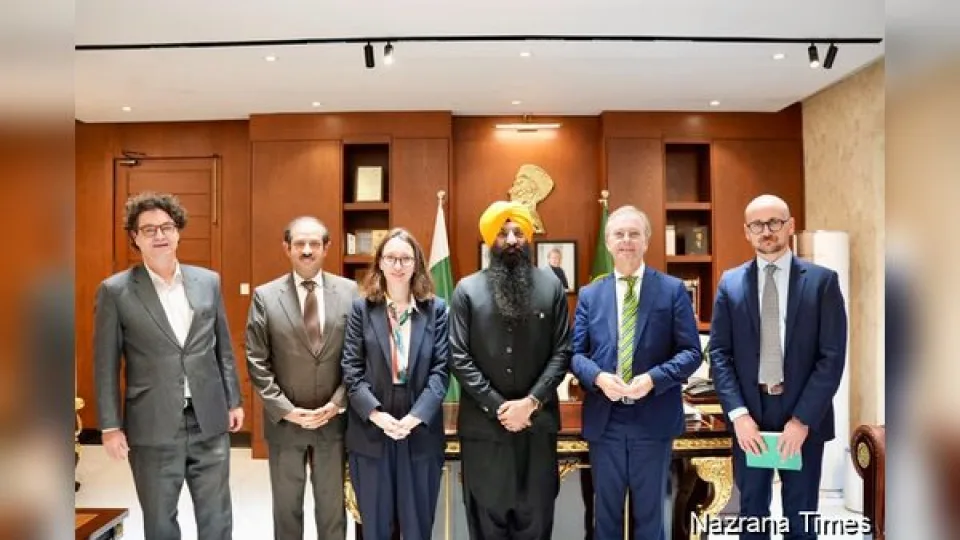
Discusses Religious Freedom and Minority Rights
LAHORE (Nazrana Times): A German delegation met Punjab Minister for Minorities Affairs Sardar Ramesh Singh Arora in Lahore, with discussions focusing on minority rights, freedom of religion or belief, interfaith harmony and measures aimed at strengthening the social and economic inclusion of minority communities in Punjab.
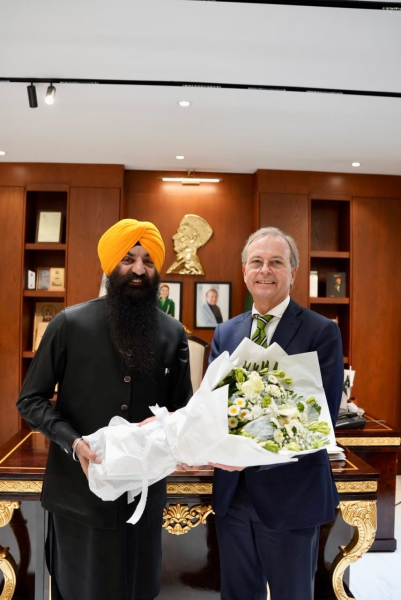
The delegation included Thomas Rachel, Germany’s Federal Government Commissioner for Freedom of Religion or Belief, and David Druksen, a member of the German Bundestag’s Foreign Affairs Committee. German Embassy Deputy Head of Mission Arno Kirchhof and First Secretary Political Violetta Kuzmova-Anang also attended the meeting.
During the talks, the German delegation welcomed Arora’s appointment as Punjab’s Minister for Minorities Affairs and noted the significance of a Sikh holding a provincial ministerial position in Punjab.
Briefing the delegation on the provincial government’s policies, Arora said the welfare, protection and empowerment of minority communities remained a priority under Punjab Chief Minister Maryam Nawaz Sharif.
He said the government was working on a comprehensive five-year strategic plan aimed at promoting minority inclusion and welfare across the province.
Minority Card and Education Initiatives
Arora highlighted the Punjab government’s Minority Card Scheme as one of its major initiatives. He said the government was working towards expanding the programme with a target of reaching one million beneficiaries.
The minister also outlined measures relating to government-authorised marriage registration for minority communities, educational scholarships, preparation programmes for Pakistan’s Central Superior Services (CSS) examinations, financial assistance for religious festivals and infrastructure development projects.
He said the provincial government was seeking to ensure that minority communities had greater access to educational, economic and institutional opportunities.
Religious Festivals and Tourism
Arora said occasions including Minority Week, Christmas, Diwali, Holi and Easter were being observed with respect and inclusiveness. He also briefed the delegation on initiatives intended to promote religious tourism and preserve the province’s diverse religious heritage.
Discussing broader socio-economic challenges, Arora said poverty remained a major issue affecting Pakistanis across religious communities and should not be viewed solely as a minority issue.
He also highlighted the work of an interfaith harmony committee comprising representatives of different faiths, saying such platforms were intended to encourage dialogue, mutual understanding and peaceful coexistence.
Punjab-Germany Cooperation Discussed
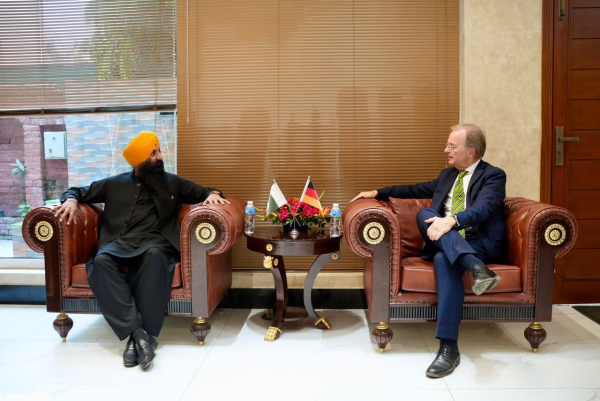
The meeting also explored possibilities for cooperation with the German government, Germany’s Foreign Office and relevant institutions in Islamabad in areas related to interfaith dialogue, religious freedom and community engagement.
Arora said young people were being involved in interfaith initiatives through programmes including student ambassador schemes.
Under these programmes, participants would be encouraged to share their knowledge and experiences within their communities and at schools, colleges, universities and religious seminaries.
He added that the initiatives were also intended to connect trained participants with a broader network of experts and organisations working in the fields of interfaith harmony and religious inclusion.
The meeting concluded with an emphasis on continued dialogue and institutional engagement between relevant authorities and organisations in Punjab and Germany.




Leave a Reply