
Khalsa Aid Founder Ravi Singh Khalsa Meets Jathedar Giani Kuldip Singh Gargajj
- Internationl
- (Asia/Kolkata)
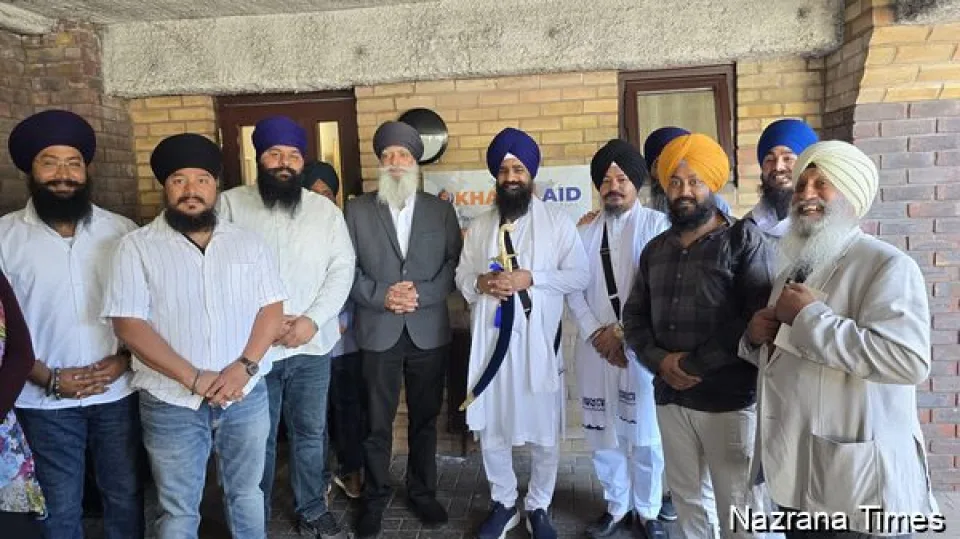
Jathedar Giani Kuldip Singh Gargajj Advises Ravi Singh Khalsa to Establish a Hospital and School in Punjab
London, July 22:swapannoor kaur/ Tajeemnoor Kaur / Kanwar Partap Singh - Khalsa Aid founder Ravi Singh Khalsa held a special meeting with Giani Kuldip Singh Gargajj, Jathedar of Sri Akal Takht Sahib, during the latter’s visit to London, United Kingdom.
During the meeting, Ravi Singh Khalsa briefed Jathedar Giani Kuldip Singh Gargajj on the humanitarian work being carried out by Khalsa Aid across various countries. He shared details of the organization’s relief and welfare initiatives aimed at serving humanity.
The two also discussed ways to further strengthen humanitarian service in keeping with the Sikh principle of Sarbat da Bhala (the welfare of all) and emphasized the importance of effectively highlighting such service initiatives before the world through the media.
Jathedar Giani Kuldip Singh Gargajj appreciated the ongoing humanitarian work of Khalsa Aid and advised Ravi Singh Khalsa to establish a state-of-the-art hospital equipped with advanced healthcare facilities in the Majha or Malwa region of Punjab at a location where it could benefit the maximum number of people. He also advised him to set up a school in Punjab’s border region to promote education and serve local communities.
Responding positively to the suggestion, Ravi Singh Khalsa assured the Jathedar that he would work towards implementing these initiatives.
At the conclusion of the meeting, both dignitaries honoured each other by presenting turbans as a mark of respect. Jaskaran Singh, Media Adviser to Jathedar Gargajj, some local Sikh youths and others were also present on this occasion.



Leave a Reply